
Introduction to Winter Vegetable Salad
Why Winter Vegetable Salads Are the Perfect Dish for Young Professionals
As temperatures drop and our schedules fill up with holiday commitments, a winter vegetable salad emerges as the perfect choice for busy young professionals. This dish is not only quick to prepare but also offers a satisfying way to include seasonal produce in your diet. Utilizing hearty vegetables like butternut squash, Brussels sprouts, and beets, it combines ease with nourishment, making it a fantastic option for weeknight dinners or festive gatherings alike.
The Health Benefits of Seasonal Veggies in Winter
Eating seasonal vegetables in winter provides numerous health benefits. According to the CDC, winter vegetables are rich in vitamins and minerals, bolstering immunity during flu season. For example, Brussels sprouts are excellent sources of vitamins C and K, while beets are known for their antioxidant properties. Additionally, incorporating these colorful vegetables can promote improved digestion and overall vitality. Embrace the health benefits of winter veggies by whipping up a fresh winter vegetable salad that brightens your plate and nourishes your body.
By making this salad a staple in your winter meal rotation, you'll not only enjoy delicious flavors but also support wellness during the colder months. Ready to dive into the recipe? Let's get started!
Ingredients for Winter Vegetable Salad
Key Ingredients: Brussels Sprouts, Butternut Squash, and Beets
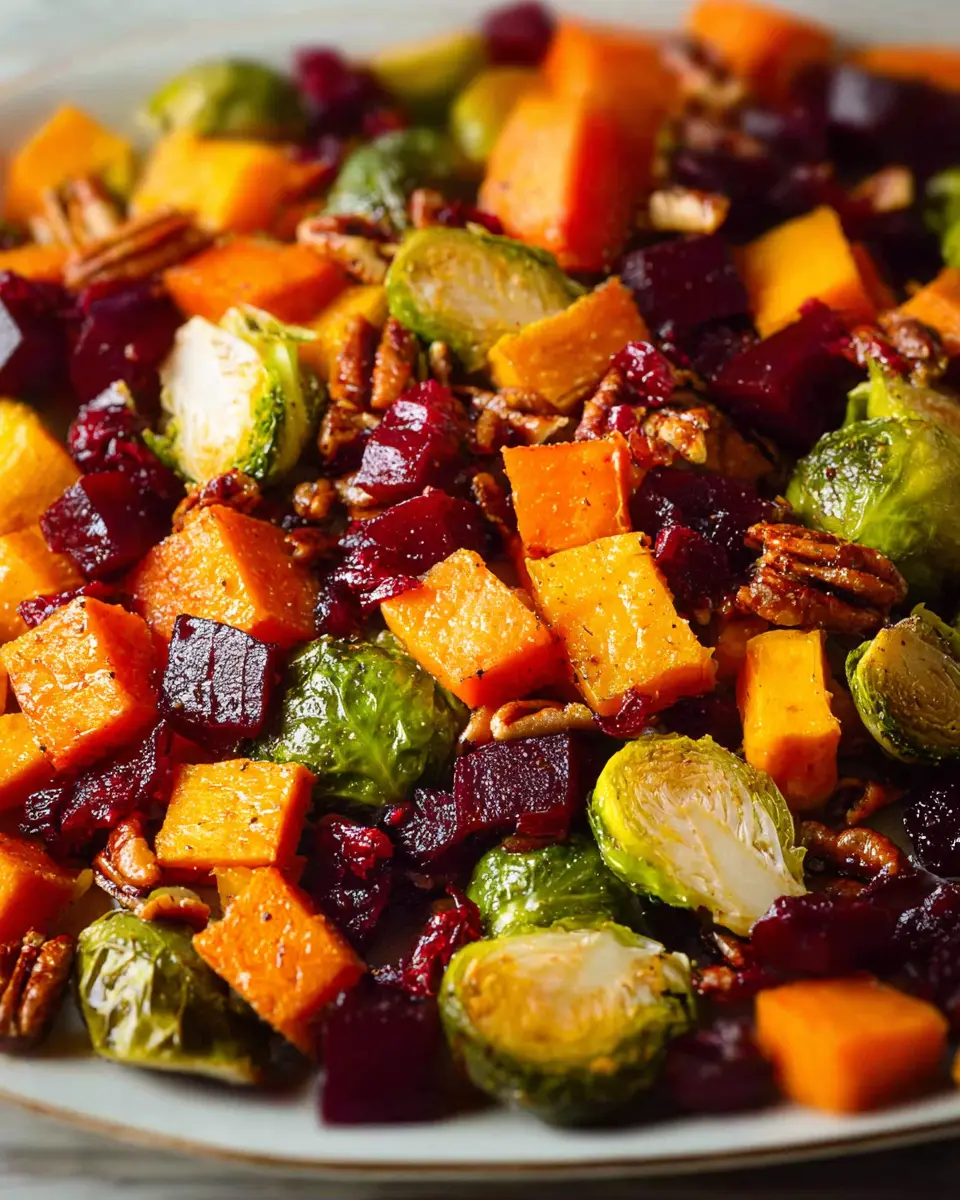
The heart of this winter vegetable salad lies in its key ingredients. Start with 3 cups of Brussels sprouts, which provide a tender crunch when roasted. Next, you'll need 4 cups of cubed butternut squash—its natural sweetness pairs beautifully with the earthy flavor of 2 cooked beets. Roasting these vegetables enhances their flavors, making every bite truly satisfying.
Optional Ingredients: Pecan and Cranberries for Texture
For added texture and flavor, consider tossing in 1 cup of dried cranberries and 2 cups of toasted pecans. These components not only contribute delightful crunchiness but also bring a festive vibe perfect for winter gatherings. You can easily make your own toasted pecans—just pop them in the oven and keep an eye on them for a quick toast!
Dressings: Maple-Lime vs. Balsamic Glaze
Now, let’s talk dressings! You have a choice between a maple-lime dressing—a sweet and tangy option—or a balsamic glaze that adds depth with its rich flavor. Each dressing beautifully complements the winter vegetable salad, allowing you to customize the taste to your preference. If you’re interested in learning more about dressings, check out this guide to homemade salad dressings for inspiration.
Preparing Winter Vegetable Salad
Creating a Winter Vegetable Salad with roasted butternut squash, Brussels sprouts, and beets might seem intimidating, but it’s a delightful and rewarding experience. This vibrant dish not only provides a feast for the eyes but is also packed with nutrients. Let’s walk through each step to ensure everything is as delicious as possible.
Prepping the Brussels Sprouts
Begin with the Brussels sprouts, which truly shine in this salad. Start by rinsing them and trimming the ends, ensuring to remove any yellow or wilted leaves. Next, slice each sprout in half to maximize their surface area for roasting. Toss them in a bowl with a splash of olive oil and a sprinkle of salt, making sure they’re well-coated. Spread the Brussels sprouts cut side down on a parchment-lined baking tray, and they’re ready for roasting. Take your time, as achieving a nice caramelization really elevates their flavor.
Roasting the Butternut Squash to Perfection
Butternut squash delivers a sweet and nutty profile that blends wonderfully with the other ingredients. Peel and cube your butternut squash into 1-inch pieces—this size ensures even cooking. Just like with the Brussels sprouts, toss the squash in olive oil and salt before placing it in a single layer on another baking sheet. Roasting at 375°F should take about 20-25 minutes until it becomes tender and caramelized. For tips on how to peel and prep your squash, check out this guide on how to roast butternut squash.
Cooking and Dicing the Beets
When it comes to beets, timing is key. I suggest cooking them a day in advance to allow their flavors to develop. Boil them in a medium saucepan of water for about 30-40 minutes, or until you can easily poke through with a fork. Let the beets cool before peeling—this is the messy part, so gloves might be a good idea! Dicing them into small pieces will make them easy to mix into your winter vegetable salad without overwhelming the other ingredients.
Toasting the Pecans for Added Flavor
Don’t skip this step! Toasting your pecans will elevate their flavor, giving your salad a satisfying crunch. Spread your pecans in a single layer on a baking sheet and roast them in a preheated 350°F oven for 5-10 minutes. Check frequently to prevent burning, as nuts can go from perfectly toasted to charred in a blink!
Assembling the Salad Layers
Now that everything is prepped, it’s time for the fun part: assembling the salad. Start with a large bowl and combine the roasted Brussels sprouts, butternut squash, toasted pecans, and dried cranberries for a delightful contrast. Finally, gently add your diced beets on top to maintain their beautiful color. For a finishing touch, consider drizzling your choice of dressing—either a maple-lime dressing or a balsamic glaze—just before serving for a burst of flavor that ties everything together.
By following these steps, your Winter Vegetable Salad will not only be a delight to eat but also a showstopper at any winter gathering! Enjoy your culinary creation!
Variations on Winter Vegetable Salad
Adding Protein: Grilled Chicken, Chicken Ham, or Turkey Bacon
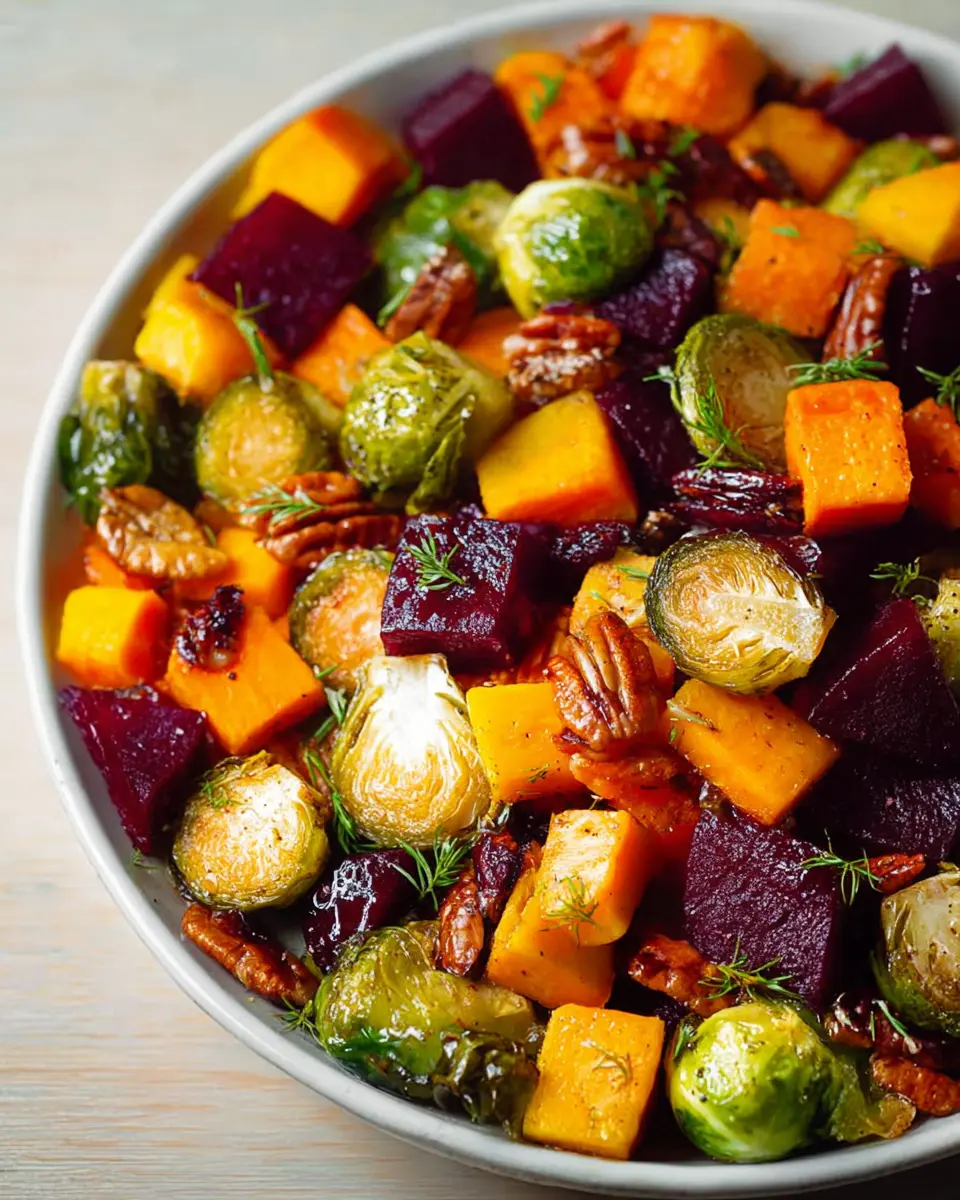
Looking to make your winter vegetable salad a bit heartier? Toss in some grilled chicken or opt for chicken ham for a savory touch. Alternatively, crispy turkey bacon can add a delightful crunch and smoky flavor. These protein additions not only enhance flavor but also make the salad more filling, perfect for lunch or dinner.
Turning It Into a Grain Bowl with Quinoa or Farro
If you want to transform your winter vegetable salad into a complete meal, consider adding grains like quinoa or farro. These nutrient-packed options not only offer a delightful texture but also boost the fiber content. Simply stir in cooked quinoa or farro for a wholesome, satisfying variation that's great for meal prepping or enjoying during busy weeknights!
Feel free to experiment with these variations and find your perfect combo. Check out this guide on the nutritional benefits of whole grains for more inspiration!
Cooking Tips and Notes for Winter Vegetable Salad
How to Avoid Overcooking the Vegetables
To keep the veggies in your winter vegetable salad crisp and vibrant, keep an eye on cooking times. Roasting Brussels sprouts for about 20-25 minutes and butternut squash for the same amount of time, while flipping them halfway, will help achieve that perfect balance of tenderness without mushiness. Remember, every oven is different, so check for doneness a few minutes early. Opt for a slightly undercooked texture, as they’ll continue to soften as they cool.
Tips for Maximizing Flavor with the Dressings
When it comes to dressings, simple is often best! For a winter vegetable salad, drizzle your balsamic glaze just before serving to maintain its vibrant color. If you’re pairing with the maple-lime dressing, toss the roasted ingredients first and then sprinkle the beets on top to avoid their pigments overpowering the salad. Balance is key, so taste as you go to achieve your perfect flavor profile. For more dressing ideas, check out the Culinary Institute of America’s guide on vinaigrettes.
Serving Suggestions for Winter Vegetable Salad
Ideal Pairings: Perfect Sides for Holiday Dinners
Elevate your winter vegetable salad by pairing it with equally festive sides. Think creamy mashed potatoes or savory roasted turkey bacon for that extra crunch. Chicken ham can be a delightful protein addition to create a hearty plate. If you're aiming for a lighter feast, why not serve it alongside a warm grain dish, like quinoa or farro?
Creative Ways to Present the Salad
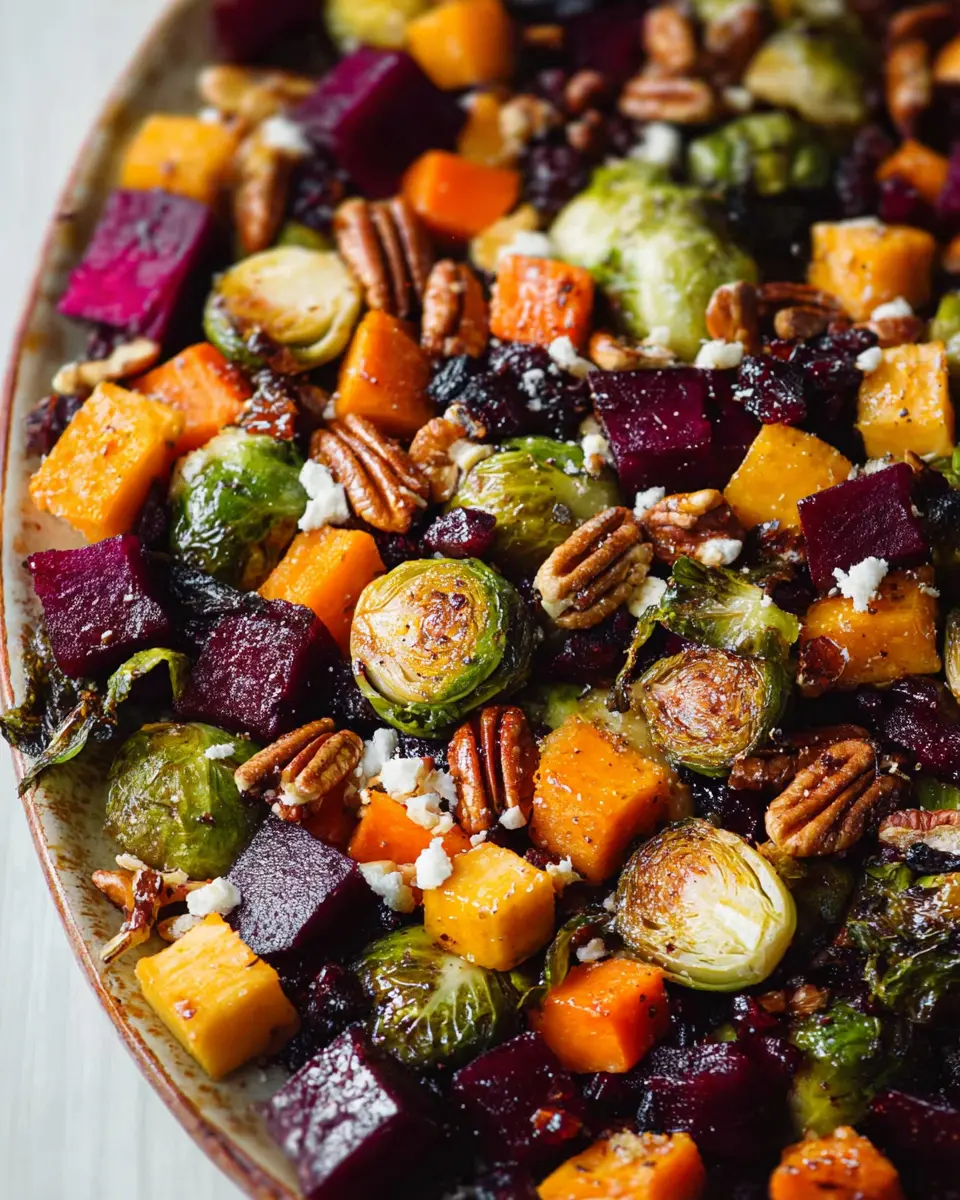
Presentation is key! Serve your winter vegetable salad in a large, beautiful bowl garnished with fresh herbs for a vibrant look. Alternatively, consider layering the salad in individual mason jars for a fun twist—perfect for impressing guests at holiday gatherings. Drizzle your dressing just before serving to keep everything fresh and colorful. For a splurge-worthy touch, sprinkle some feta or goat cheese on top.
For more ideas on seasonal vegetables and recipes, check out the USDA’s seasonal produce guide.
Time Breakdown for Winter Vegetable Salad
Preparation Time
Getting your ingredients ready takes about 20 minutes. This includes peeling and chopping the butternut squash and preparing the Brussels sprouts. Don’t forget to boil your beets in advance for the best flavor!
Cooking Time
You'll need 40 minutes for roasting the vegetables. The Brussels sprouts and butternut squash can roast together in the oven, making it super efficient!
Total Time
In total, you’re looking at 1 hour from start to finish, including prep and cooking. Perfect for a cozy evening or festive meal, this winter vegetable salad is well worth the time invested!
For more tips on roasting techniques, feel free to check out this guide on roasting vegetables for further insights!
Nutritional Facts for Winter Vegetable Salad
Calories per serving
This Winter Vegetable Salad packs a nutritious punch with about 526 calories per serving. It’s a satisfying choice, especially during the colder months when you crave comfort food without compromising your health.
Key vitamins and minerals
Filled with an array of vibrant veggies, this salad is rich in essential vitamins and minerals, including:
- Vitamin A from butternut squash, which supports eye health.
- Vitamin K from Brussels sprouts, important for bone health.
- Folate from beets, great for overall cellular function.
- Fiber from vegetables and pecans, aiding digestive health.
Incorporating this salad into your meal plan not only brightens your plate but also boosts your overall wellbeing. For more insights on the health benefits of vegetables, check out Healthline’s guide on vitamins. Enjoy the array of flavors and health benefits in every bite!
FAQs about Winter Vegetable Salad
How can I make my salad more filling?
To turn your winter vegetable salad into a heartier meal, consider adding protein-rich ingredients like chickpeas, quinoa, or turkey bacon. These additions not only boost the nutritional value but also enhance the flavor and texture of the salad.
What’s the best way to store leftovers?
If you have any leftover salad, store it in an airtight container in the refrigerator. To maintain freshness, keep the dressing separate until you're ready to enjoy it again. Cold salads can usually last for about 3 to 4 days, but it's best to consume them sooner for optimal taste.
Can I use frozen vegetables instead of fresh?
Absolutely! While fresh vegetables typically have a better texture and flavor, using frozen vegetables can be a convenient option when fresh ones aren't available. Just be sure to thaw and drain them well before adding them to your winter vegetable salad to avoid excess moisture. For additional tips on using frozen veggies, visit EatingWell.
Conclusion on Winter Vegetable Salad
In summary, this Winter Vegetable Salad with roasted butternut squash, Brussels sprouts, and beets is a delightful dish that brightens even the coldest nights. Packed with nutrition and vibrant flavors, it’s not just a festive side but a comforting way to enjoy winter veggies. Perfect for gatherings!
Winter Vegetable Salad with Butternut Squash, Brussels Sprouts, and Beets
Equipment
- Oven
- Baking sheet
- parchment paper
- medium bowl
- Medium-sized saucepan
Ingredients
Roasted Brussels Sprouts
- 3 cups Brussels sprouts raw, ends trimmed, yellow leaves removed
- 2 tablespoons olive oil
- salt to taste
Roasted Butternut Squash
- 4 cups butternut squash uncooked, peeled, seeded, and cubed into 1-inch cubes
- 2 tablespoons olive oil
- salt to taste
Other Salad Ingredients
- 2 large beets I recommend pre-cooking them at least 1 day in advance
- 2 cups pecan halves
- 1 cup dried cranberries
Balsamic Glaze
- 1 cup balsamic vinegar
- ¼ cup honey or brown sugar
Maple-Lime Dressing
- 4 tablespoons maple syrup
- 1 tablespoon freshly squeezed lime juice add 1 more tablespoon, to taste
Instructions
How to Roast Brussels Sprouts
- Preheat oven to 375 F. Line the baking sheet with parchment paper.
- Trim ends of Brussels sprouts and remove yellow leaves. Slice all Brussels sprouts in half.
- In a medium bowl, combine halved Brussels sprouts, 2 tablespoons of olive oil, salt (to taste), and toss to combine.
- Place Brussels sprouts onto a parchment paper-lined baking sheet, cut side down, and roast in the oven at 375 F for about 20-25 minutes.
- During the last 5-10 minutes of roasting, turn them over for even browning.
How to Roast Butternut Squash
- Preheat oven to 375 F. Line the baking sheet with parchment paper.
- In a medium bowl, combine cubed butternut squash, 2 tablespoons of olive oil, and salt, and toss to combine.
- Spread butternut squash in a single layer on the baking sheet. Bake for 20-25 minutes, turning once half-way through baking until softened.
How to Cook Beets
- Add 2 beets to a medium-sized saucepan filled with water. Bring to a boil.
- Boil the beets on medium heat, half-covered, for about 30 or 40 minutes until soft.
- Using a large spoon or a ladle, carefully remove beets from hot water. Let them cool.
How to Toast Pecans
- Preheat the oven to 350 F. Line a baking sheet with parchment paper. Spread pecans in a single layer.
- Toast the pecans for about 5 to 10 minutes in the preheated oven at 350 F until they get darker in color.
Assembly
- In a large bowl, toss together roasted Brussels sprouts, roasted butternut squash, toasted pecans, and dried cranberries.
- Add diced cooked beets last, otherwise they will color the salad dark red color.


Leave a Reply